


How Long Does a Mini Scuba Tank Last Underwater?
Compare OXSEA’s estimated air times, learn why depth and effort change them, and see which tank and refill system fits your plans. Actual air time varies with use and conditions.
Contents
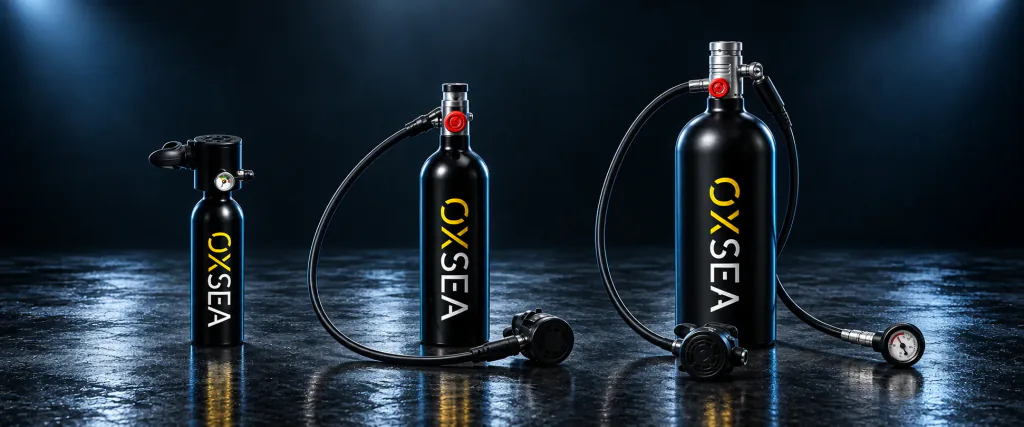
A mini scuba tank has no fixed underwater duration. OXSEA lists indicative air times of up to 8 minutes for the OX500, 15 minutes for the OX1000, and 25 minutes for the OX2000, but actual time can be considerably shorter depending on your breathing, depth, effort, and conditions.
Those figures describe an estimated air supply. They don’t tell you how long to stay underwater, and they don’t include a personalized plan for your return and reserve. Choose a cylinder by its capacity, how you’ll carry it, and how you’ll refill it, then plan its use with appropriate scuba instruction.
How Long Does a Mini Scuba Tank Last?
Here’s how the OXSEA range compares. These are manufacturer specifications, not results from an independent underwater endurance test.
| Model | Cylinder capacity | Manufacturer’s indicative air time | How it’s carried |
|---|---|---|---|
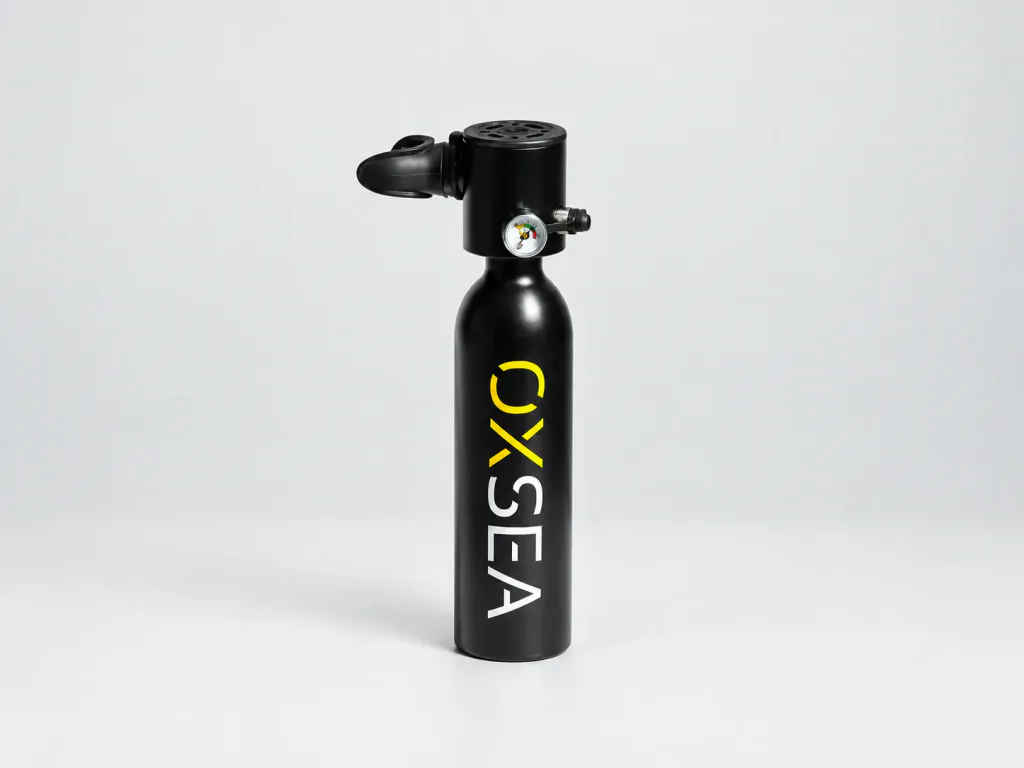
| OX500 | 0.5 liter | Up to 8 minutes | In the mouth, with an integrated regulator and pressure gauge |
| OX1000 | 1 liter | Up to 15 minutes | On the back, with a harness and separate regulator |
| OX2000 | 2.3 liters | Up to 25 minutes | On the back, with an adjustable harness, external regulator, and separate pressure gauge |
All three have a working pressure of 200 bar. Capacity is the cylinder’s internal volume; it isn’t the amount of uncompressed air available to breathe. A bigger cylinder can hold more air at the same pressure, but that doesn’t make its advertised duration a schedule you can follow underwater.
For a compact setup, the OX500 mini scuba tank puts a 0.5 liter cylinder, regulator, and gauge together. That makes it the starting point to compare if a small format matters most to you. Its limited supply also makes realistic expectations especially important.
Good to know: buying a DUO pack gives you two separate cylinders. It doesn’t turn their individual estimates into one continuous underwater session.
Why Does Depth Change Mini Scuba Tank Time?
Water pressure rises as you descend. Each breath at depth uses more of the cylinder’s stored air than the same breath near the surface, so the gauge can fall faster even when your breathing feels unchanged. Depth is one of the factors highlighted in DAN’s guidance on air consumption.
That matters when you compare two accounts of the same model. Someone describing a quiet session close to the surface and someone describing a deeper swim aren’t reporting equivalent conditions. A duration without its depth and activity tells you very little.
Don’t read the table as a depth recommendation. Follow the limits in your model’s manual and your scuba qualifications; a larger OXSEA cylinder doesn’t, by itself, authorize a deeper dive. Stay within the most restrictive limit that applies to you, the equipment, and the conditions.
Why Does Your Air Run Out Faster Than Expected?
Swimming effort and anxiety
Finning against moving water or feeling anxious can increase air use. If the activity becomes harder than planned, the original time estimate becomes less useful. DAN identifies both exertion and anxiety as reasons a cylinder can empty sooner than expected.
Starting with less air
A tank that was used earlier needs another pressure check before the next outing. Picking it up from yesterday’s gear bag tells you nothing about its current fill. Follow the manual’s check procedure instead of assuming that a recently filled cylinder is still ready.
Equipment that needs attention
A leak or regulator malfunction can waste air. Listen and look for problems during the prescribed equipment check, and take questionable equipment out of use. A refill doesn’t fix a leak.
A useful record after a properly planned session includes the model, starting and ending pressure, conditions, and what you were doing. It gives you something more informative than “I got a few minutes.” Use it when reviewing your gas plan.
Don’t try to improve that record by pausing between breaths. The goal is to finish with an appropriate reserve, not to get the longest possible time from a bottle.
What Should You Check Before Using a Mini Scuba Tank?
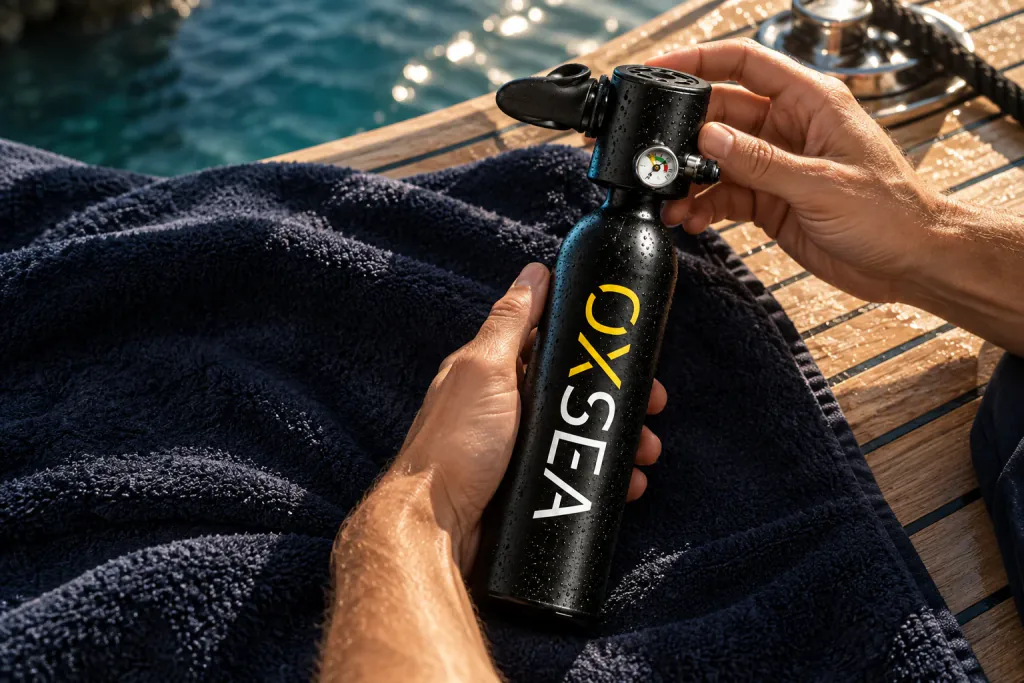
A small cylinder still supplies compressed air underwater. Learn to use scuba equipment with a qualified instructor before using it, including buoyancy control, gas planning, and emergency procedures. PADI’s scuba safety guidance explains why equipment checks and the skills appropriate to your dive belong together.
Get familiar with your particular model on land. Locate its gauge and controls, read the inspection steps, and check that its components match the manual. For a model worn on the back, check the harness fit and hose arrangement before entering the water.
Use the OXSEA manuals and tutorials for product instructions and review the equipment precautions. Written instructions complement practical scuba instruction; they don’t establish your ability to handle an underwater problem.
After use, follow the manufacturer’s freshwater rinsing, drying, and storage instructions. Keep up with servicing and cylinder inspections on the prescribed schedule. Don’t disassemble a regulator or alter a high pressure connection to investigate a fault yourself; contact support for the correct service route.
Which OXSEA Tank Fits Your Plans?
Start with the format you can comfortably handle and the air supply your planned activity calls for. DAN’s overview of scuba cylinders recommends considering gas consumption, the planned dive, comfort, and potential buddy needs when choosing a cylinder.
OX500 for the smallest format
The OX500 has the smallest capacity in the range and stays in the mouth. You don’t have a separate tank harness to fit, and the regulator and gauge are integrated into the unit. Compare it first if your priority is compact equipment for brief, appropriately planned use near the surface.
The tradeoff is the smaller air supply. Don’t pick the OX500 on the assumption that you’ll always receive the full advertised eight minutes. Check its instructions and the complete equipment requirements for your intended use before buying.
OX1000 for a cylinder worn on the back
The OX1000 moves the cylinder onto a harness and uses a separate regulator. Its 1 liter capacity gives you more stored air than the OX500 at the same fill pressure. The change in carrying position can matter as much as the difference in capacity.
Choose between these two by considering both arrangements, rather than treating the time figures as the only difference. The OX1000 also works with the Mini Compressor and Power Compressor.
OX2000 for the largest capacity
The OX2000 offers 2.3 liters, an adjustable harness, and a separate pressure gauge. It has the greatest capacity in the current range, with a manufacturer estimate of up to 25 minutes. Your own duration still depends on use and conditions.
Its refill system needs to be part of the purchase decision: OXSEA specifies the Power Compressor for the OX2000. If you already own a Mini Compressor, don’t assume that it covers this larger model.
Use the OXSEA model comparison to check capacity and carrying style together. Once you’ve selected a cylinder, choose the compatible refill setup.
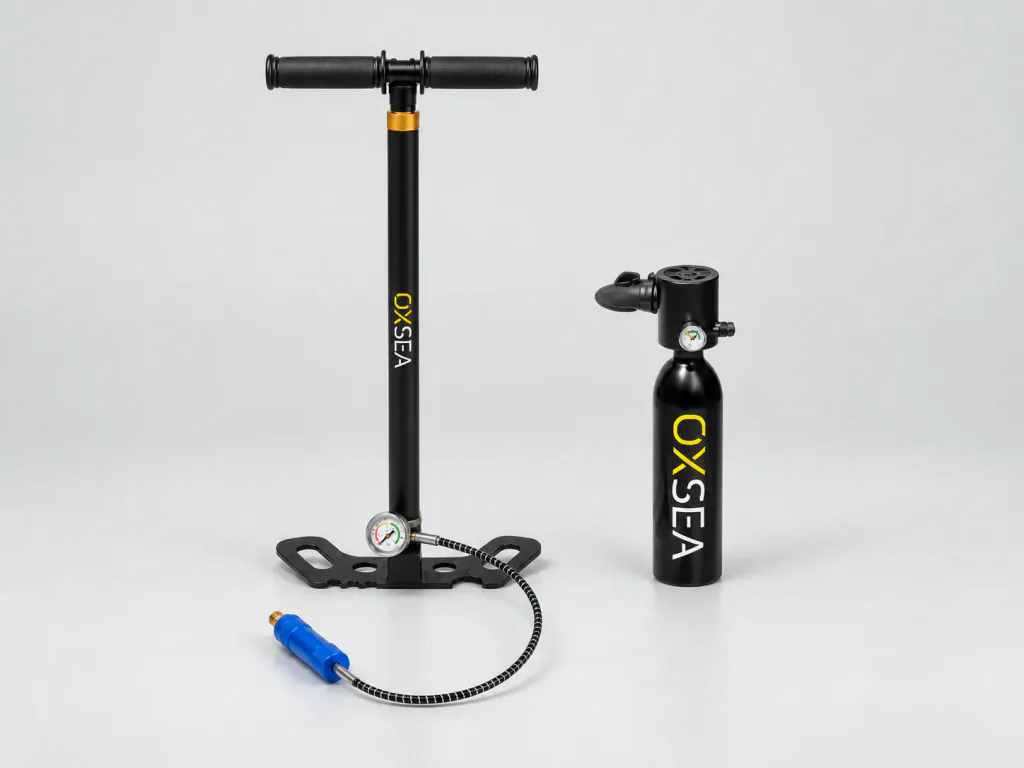 Starter Pack: OX500 + Manual Pump1 × OX500 Tank · 1 × Manual Pump$499.99 USD
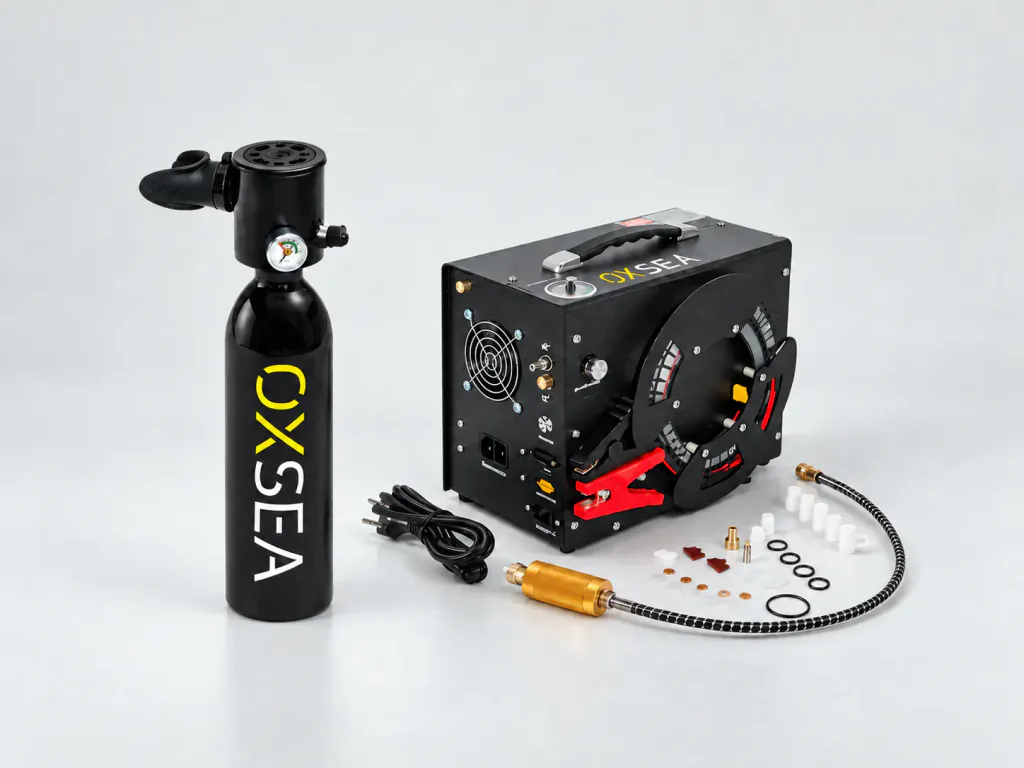 OX500 Pack + Mini Compressor1 × OX500 Tank · 1 × Mini Compressor$949.00 USD
How Do You Refill a Mini Scuba Tank?
Refill time and underwater time are separate questions. One tells you how to prepare the cylinder; the other depends on how you use its air. Include both when deciding what equipment belongs in your kit.
Only use a compatible system intended to supply breathing air, with the filtration, maintenance, and filling procedure specified by the manufacturer. A bicycle pump or workshop compressor is unsuitable. Fill these tanks with breathing air, never pure oxygen.
| OXSEA refill system | Compatible tanks | Published approximate refill times | Practical consideration |
|---|---|---|---|
| Manual Pump | OX500 only | About 20 minutes for OX500 | Requires sustained physical effort |
| Mini Compressor | OX500 and OX1000 | About 12 minutes for OX500 | US model uses 12 V DC |
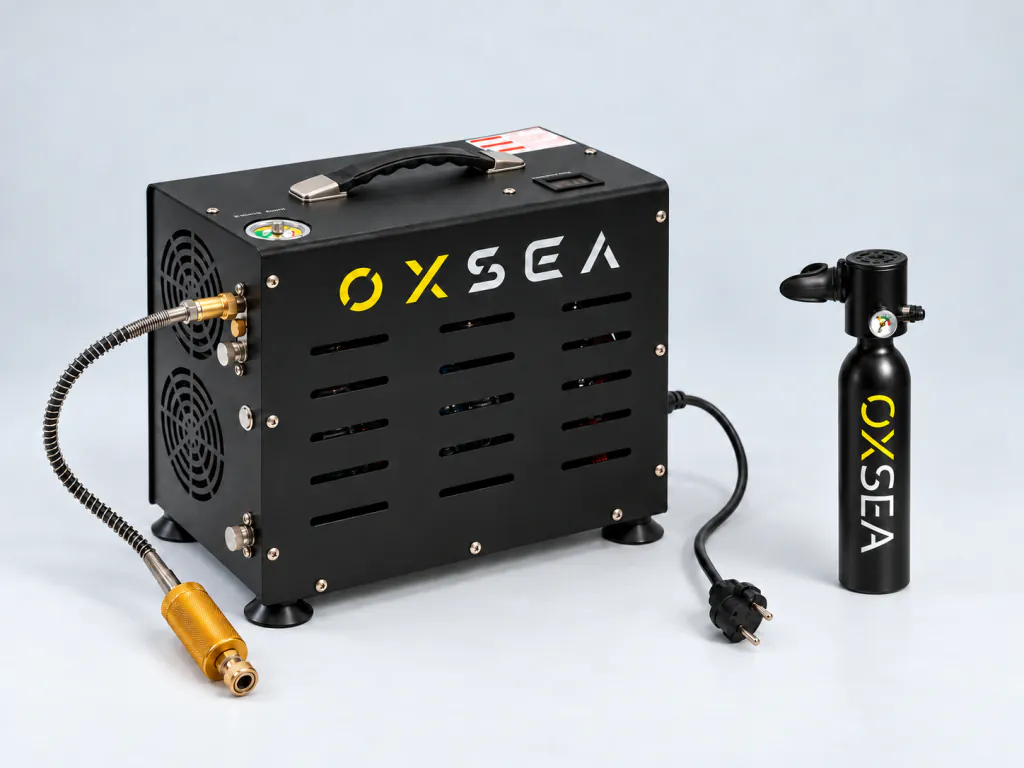
| Power Compressor | OX500, OX1000, and OX2000 | About 5 minutes, 12 minutes, and 20 to 25 minutes, respectively | Requires AC power |
These are approximate manufacturer figures. Follow the filling instructions and equipment limits rather than treating a time in the table as a signal to disconnect.
Match the refill system to where you’ll use it
The manual pump suits an OX500 setup when access to electrical power is limited and you accept the work involved. It isn’t an option for the OX1000 or OX2000.
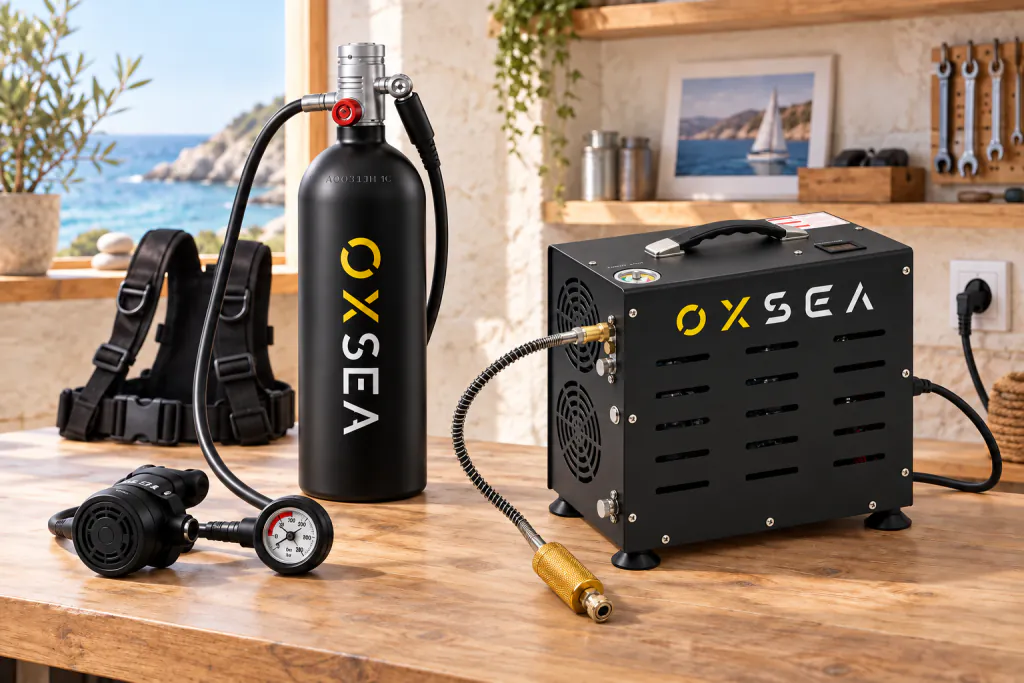
For an OX500 or OX1000 setup with a suitable 12 V DC source, compare the Mini Compressor. Don’t assume the US unit includes an adapter for a household outlet. Check the product instructions and power requirements before arranging your filling location.
For the OX2000, select Power. It also supports the smaller tanks, which makes it worth comparing if your equipment plans include more than one model. Check the specified AC supply requirements rather than assuming compatibility with any available outlet.
Plan the whole setup before ordering
For help with model choice, pack contents, and ordering in the United States, use our OXSEA mini scuba tank buying guide.
An OX500 bottle and an OX500 refill pack solve different purchasing needs. The bottle makes sense if you already have a compatible filling method; a pack puts the matched cylinder and refill equipment in the same order.
For occasional use, compare the manual pump’s effort with the Mini Compressor’s power requirements. For a larger cylinder, settle the refill question before deciding that its extra capacity is right for you. You can review the available tank and refill packs side by side.
OXSEA · OX500 Tank
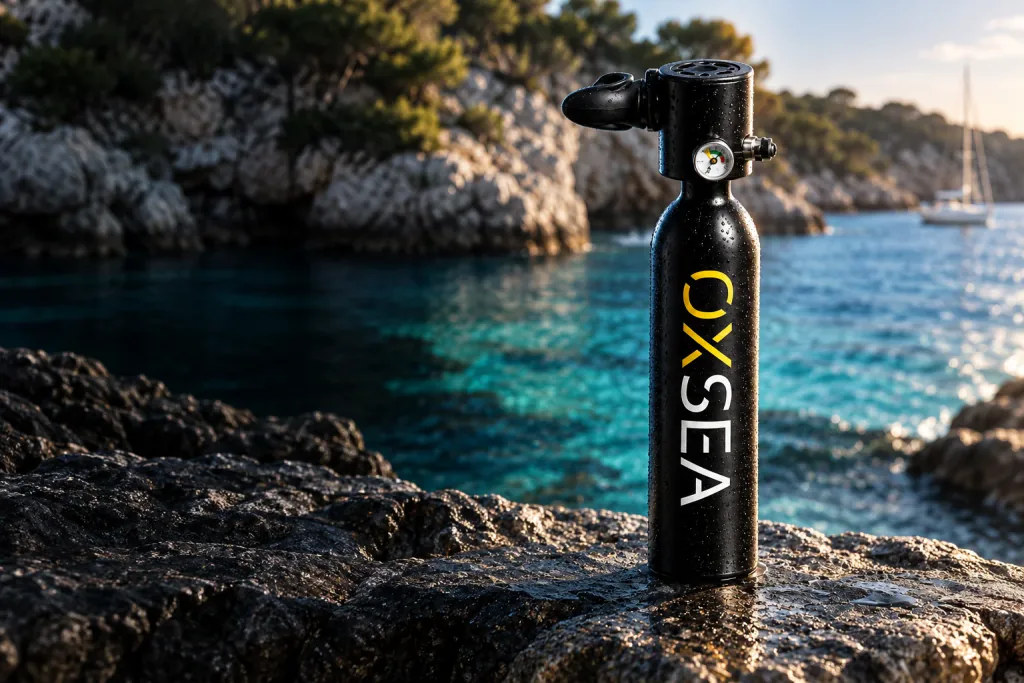
Take a Closer Look at the OX500
Check the compact 0.5 liter setup, its instructions, and compatible refill packs before choosing your equipment.
Start with the OX500 product details if compactness is your priority. If your planned use calls for more air or a cylinder worn on the back, compare the OX1000 and OX2000 before you order.
Your questions
How long does a 0.5 L mini scuba tank last?
OXSEA lists up to 8 minutes for its 0.5 liter OX500. This is an indicative manufacturer estimate, not a guaranteed underwater duration; breathing, depth, effort, and conditions can shorten it. Plan for the return and an appropriate reserve.
Do mini scuba tanks work?
Yes. A mini scuba tank stores compressed breathing air and delivers it through a regulator. Its small capacity limits the available supply, and using one still calls for scuba skills, suitable equipment, and a planned dive.
Why are mini scuba tanks dangerous?
The risks include running out of air and lung injury if you hold your breath during ascent. Small size doesn’t remove the risks of breathing compressed air underwater. Get appropriate scuba instruction, use a buddy system, and follow the equipment manual.
How does mini scuba tank depth affect air time?
Greater depth increases the amount of stored air used for each breath, so a cylinder generally lasts less time at depth under otherwise similar conditions. Don’t use advertised minutes to choose a depth; follow your equipment limits and scuba qualifications.
How long can you store a full scuba tank?
There isn’t one storage duration or pressure that applies to every cylinder and regulator. Follow the instructions for your specific model, including storage conditions and inspection intervals. Before reuse, complete the prescribed equipment and pressure checks.
A question about your situation? Write to the OXSEA team
Take the plunge
The sea,
one breath away.
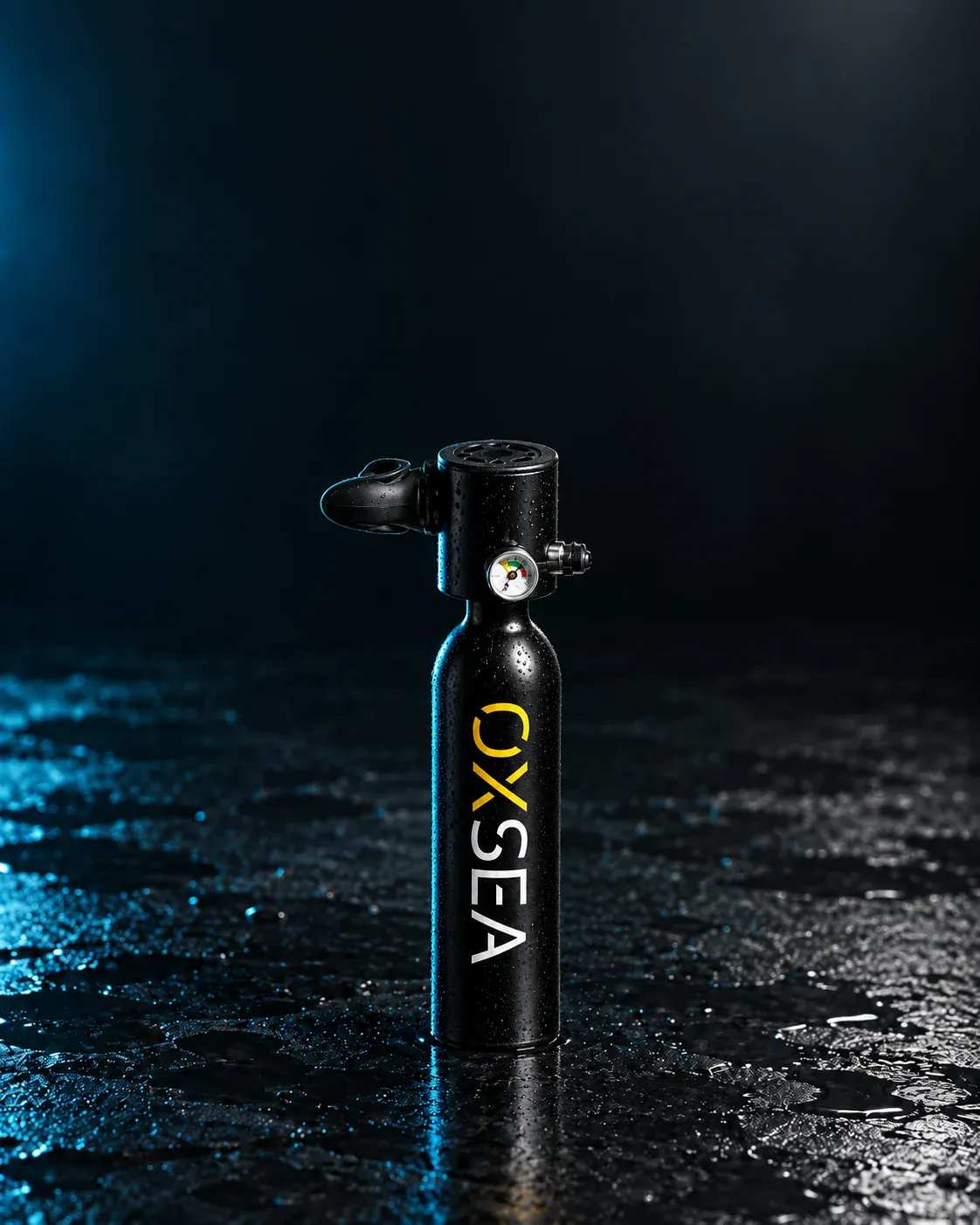
A rechargeable mini tank to stretch every dive and take the time to look around, with no heavy gear.
OX500 Tank
- 0.5 L
- Up to 8 min*
- Held in the mouth
With its refill system, ready to go
Compare tanks Compare mini scuba tanks
* Estimated air time, not guaranteed. OXSEA tanks are designed to be accessible to everyone, with no training required.
Read next
All articles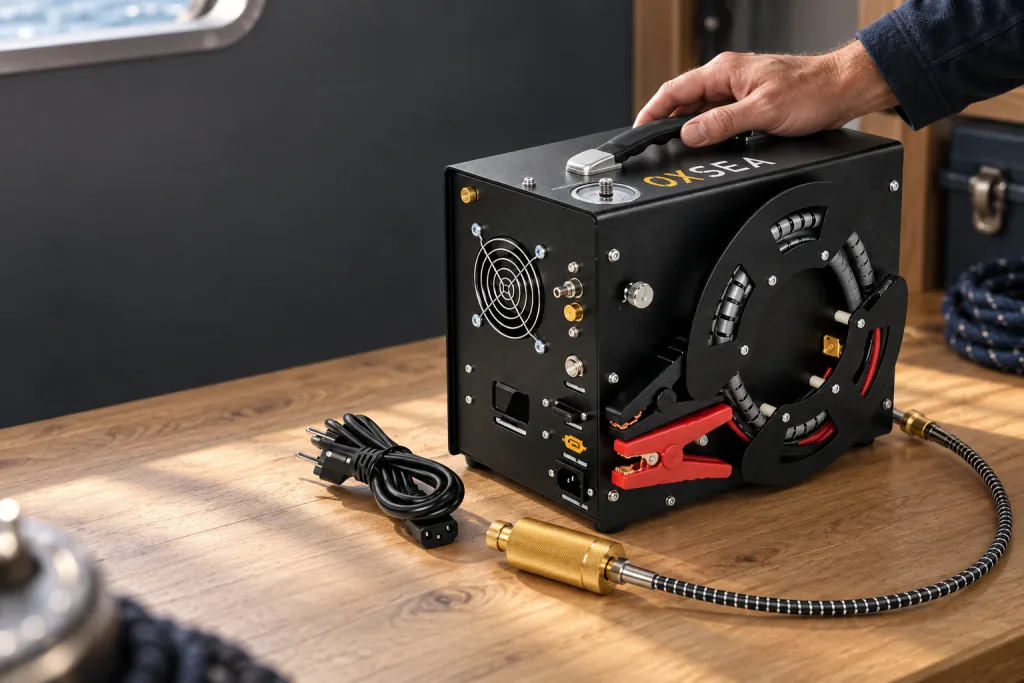
Getting started underwater7 min read
Mini Scuba Tank Refill Options for US Buyers
Compare OXSEA manual pumps, 12 V DC Mini Compressors, and AC-powered Power Compressors. Find the refill setup that matches your tank and available power.
Getting started underwater9 min read
OXSEA Mini Scuba Tank Buying Guide for US Buyers
Choose your OXSEA tank around how you’ll carry it, use it, and refill it. Compare the US range, understand air time estimates, and check the order details before buying.
Boat owners9 min read
How to Clean a Boat Propeller Without Damaging the Blades
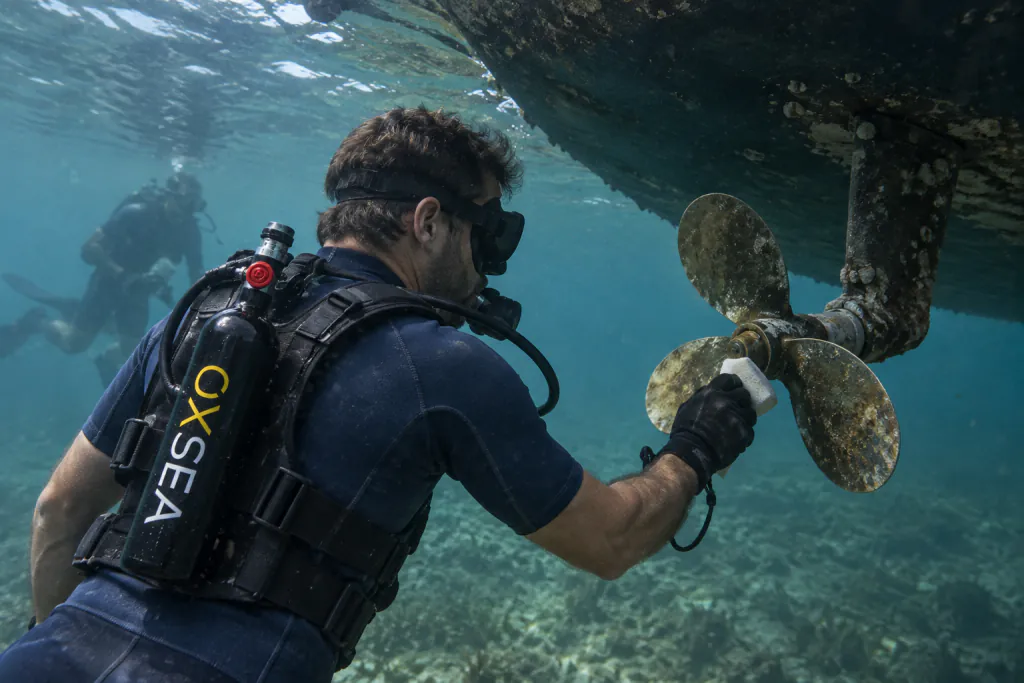
A soft sponge can handle light propeller fouling, but hard growth needs a different approach. Learn the cleaning steps and why the OXSEA OX1000 suits short underwater inspections and gentle upkeep.
OX500 Tank$299.00 USD
Discover