


How to Clean a Boat Propeller Without Damaging the Blades
A soft sponge can handle light propeller fouling, but hard growth needs a different approach. Learn the cleaning steps and why the OXSEA OX1000 suits short underwater inspections and gentle upkeep.
Contents
- Can You Clean a Boat Propeller in the Water?
- What Should You Check Before Going Under a Boat?
- What Should You Use to Clean a Boat Propeller?
- How to Clean a Boat Propeller With Light Marine Growth
- How Do You Remove Barnacles From a Propeller?
- Which OXSEA Tank Fits Propeller Cleaning?
- How Often Should You Clean a Boat Propeller?
To clean a boat propeller, secure the boat and disable its propulsion, then remove soft growth with a wet, nonabrasive sponge approved for the propeller’s finish. Light cleaning may be possible in the water where permitted; hard barnacles, damaged coatings, and mechanical problems call for a different plan, often with the propeller out of the water.
Knowing how to clean a boat propeller starts with identifying what’s on the blades. A thin slippery film and a crust of shells are different jobs. For competent scuba divers handling a short inspection or gentle cleaning, an OXSEA mini scuba tank offers a compact air supply you can keep aboard.
Can You Clean a Boat Propeller in the Water?
Sometimes. A light layer of slime on an accessible propeller can be a manageable maintenance job, provided the finish allows gentle wiping and the entire operation fits your diving experience. A prop buried in hard growth is a different proposition.
Consider access first. If your boat is already on a trailer or properly supported ashore, clean the prop from land. Don’t enter the water simply because you have an air tank. Never work beneath a boat suspended only by lifting equipment.
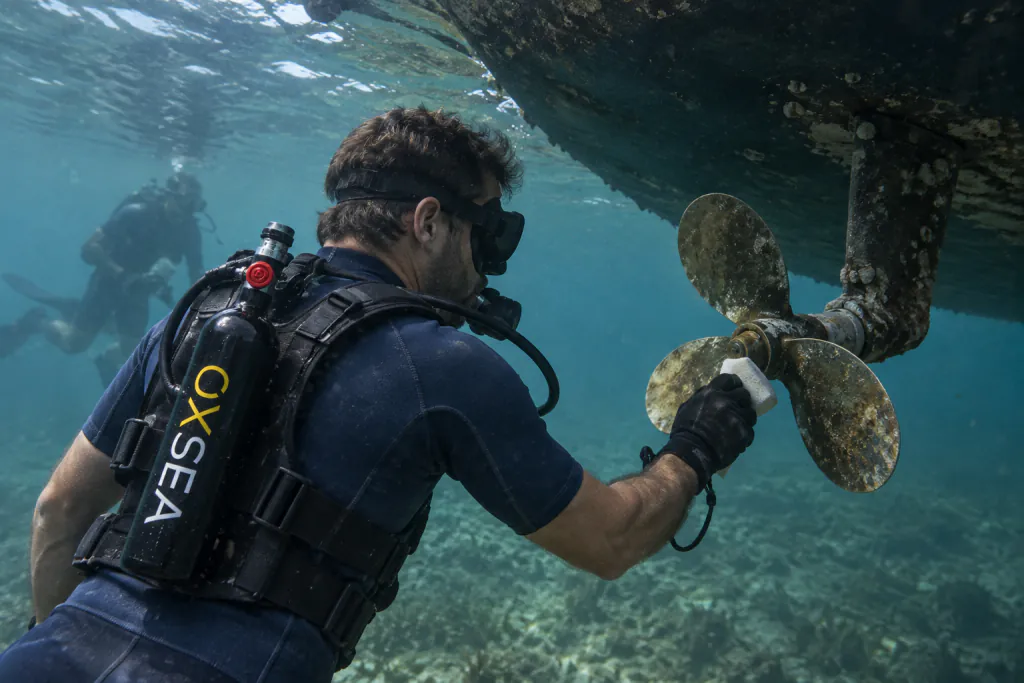
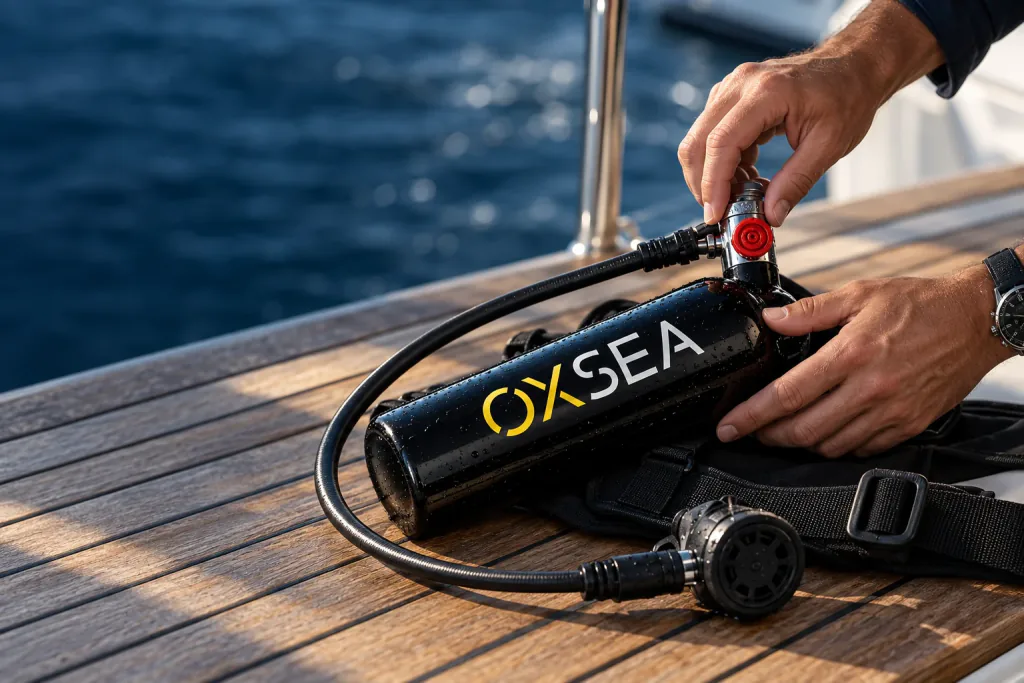
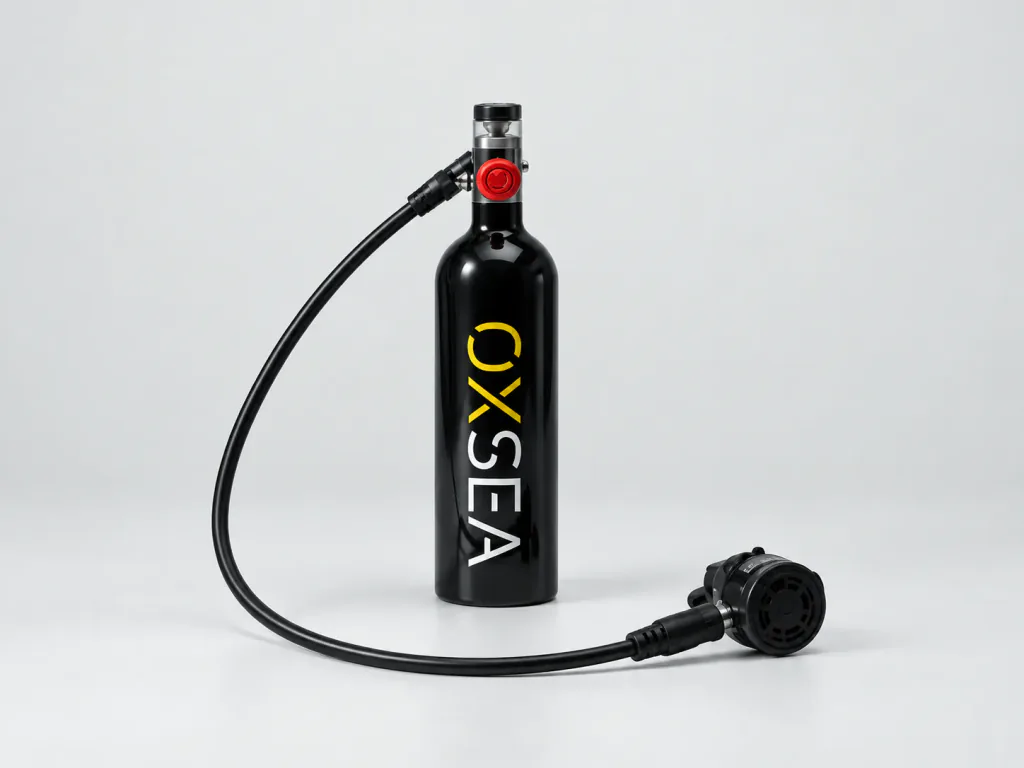
For an inboard boat at a suitable mooring, the OXSEA OX1000 is particularly well suited to short inspections and light upkeep. Its 1-liter cylinder sits on your back in a harness, with a separate regulator at your mouth. You can handle a sponge and examine a blade without holding the cylinder.
Confirm local cleaning restrictions before planning an immersion. Some locations restrict underwater scraping or the release of fouling and coating residue. The North Carolina Clean Marina boater guide illustrates why both cleaning practices and swimming around marinas require care. Permission to keep a boat in a slip doesn’t mean permission to clean beneath it.
What Should You Check Before Going Under a Boat?
Prepare the boat before preparing the sponge. Agree on who controls the keys, how the divers will communicate, and how everyone will get back aboard. Check the boarding ladder from the water side before you need it.
Compressed-air diving calls for scuba skills and emergency preparation even close to the surface. If you haven’t learned these with a qualified instructor, arrange that before attempting underwater maintenance. Divers Alert Network’s safe diving practices cover buddy checks, air monitoring, and staying within your capabilities.
Read the OXSEA safety guidance and the manual for your model. If you have doubts about your fitness to dive, seek medical advice before entering the water. A bigger cylinder cannot make unsuitable conditions acceptable.
What Should You Use to Clean a Boat Propeller?
Start with the least aggressive tool approved for the surface. A clean, soft sponge or cloth suits light deposits on many finishes. Carry a spare so you can replace one contaminated with grit or shell fragments.
“Nonabrasive” matters more than the color of the pad. Don’t assume a household scouring sponge is suitable because it feels soft in your hand.
| Propeller surface | Starting point | What to avoid |
|---|---|---|
| Coated propeller | Follow the coating maker’s cleaning instructions; use a soft wet cloth only if permitted | Scrapers, abrasive pads, or polishing that removes the coating |
| Bare stainless steel | Gentle wiping for soft growth; manufacturer-approved treatment ashore for persistent deposits | Treating every stain as dirt or using an unapproved acid |
| Bare bronze or Nibral | Gentle wiping, followed by inspection of deposits and metal condition | Sanding away pitting or trying to reshape a blade |
| Painted aluminum | A soft sponge compatible with the paint | Scraping through paint or applying a cleaner intended for another metal |
For anyone searching how to clean a bronze boat propeller or how to clean stainless steel boat propeller surfaces, the coating is the first thing to establish. Metal type alone doesn’t tell you which cleaning method is appropriate.
Keep acids, detergents, and polishing compounds out of an in-water cleaning session. If a chemical treatment is needed, use a suitable shore facility with runoff collection and follow the product label and propeller manufacturer’s instructions.
How to Clean a Boat Propeller With Light Marine Growth
The sequence below covers gentle surface cleaning after the boat and dive preparations above. It doesn’t cover propeller removal, shaft repairs, or clearing tangled line.
1. Inspect before touching
Look at the blade faces, edges, and visible hub. Note soft slime, hard shells, flaking coating, fishing line, or anything that looks bent. If you cannot distinguish the surface from the growth, stop and arrange a closer inspection ashore.
Don’t pull on the propeller to hold yourself in position. Avoid pinch points on folding or feathering designs, and follow their specific maintenance instructions.
2. Test a small area
Wet the sponge fully and make a light pass over an accessible patch. Soft growth should wipe away without force. If the coating transfers onto the sponge or the deposit resists, stop rather than changing to a harsher tool.
The test tells you whether the job matches the plan. It is not an invitation to keep increasing pressure until something comes off.
3. Work across each accessible blade face
Use short, gentle strokes, inspecting the area you’ve just cleaned. Keep gloved fingers away from sharp edges and any moving joint. Rinse the sponge often so trapped particles don’t turn it into an abrasive pad.
Clean only what you can reach comfortably. Don’t wedge yourself beneath the hull or force a propeller to rotate to reach a hidden face.
4. Pause to check the job and your air
Check your gauge throughout the task and keep contact with your buddy. Scrubbing adds workload, so a tank’s advertised duration is not a cleaning timetable.
End the session according to your planned reserve, or sooner if breathing becomes harder, you feel cold, or visibility deteriorates. An unfinished blade can wait.
5. Record anything that needs attention
Once aboard, note coating loss, remaining deposits, or suspected damage. A photograph can help a marine technician decide what inspection is needed next. Keep propulsion disabled until everyone and every tool is out of the water and accounted for.
How Do You Remove Barnacles From a Propeller?
Hard barnacles and their attached bases often need more than a sponge. If they resist gentle cleaning, arrange work ashore or a qualified professional service using methods appropriate to the propeller and local environmental requirements.
Avoid chiseling, hammering, or powered scraping underwater. Don’t try to turn a fouled, coated propeller into shiny bare metal. The right finish may be an intact coating.
When the propeller is accessible ashore, confirm its material and finish, then use only the removal method approved by the propeller or coating manufacturer. Persistent scale may need a compatible marine cleaner with controlled runoff. There is no universal acid treatment for stainless steel, bronze, aluminum, and coated blades.
Fishing line deserves separate attention. Mercury Marine’s propeller maintenance guidance explains that line can work behind the hub and damage the shaft seal. Visible strands disappearing behind the prop are a reason to arrange proper inspection, not proof that pulling the exposed piece will solve the problem.
Bent blades, cracks, significant pitting, and vibration after an impact also need professional assessment. Polishing cannot restore blade geometry. If you’re wondering how to polish a boat prop, first establish whether polishing is appropriate at all.
Which OXSEA Tank Fits Propeller Cleaning?
For this job, the OX1000 is our first choice. The back-mounted cylinder and separate regulator suit a task that involves looking closely and using your hands, while its compact format is convenient to store aboard.
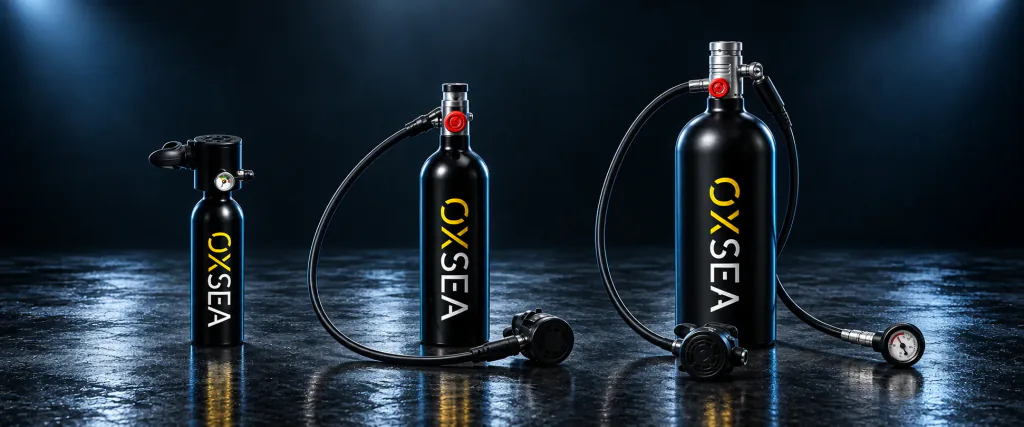
The range gives you three configurations:
| Model | Cylinder and carrying arrangement | Indicative air time* | Where it fits |
|---|---|---|---|
| OX500 | 0.5 L, mouth-held cylinder, integrated regulator and gauge | Up to 8 minutes | A brief visual check with minimal equipment |
| OX1000 | 1 L, back-mounted harness and separate regulator | Up to 15 minutes | Short inspections and gentle propeller upkeep |
| OX2000 | 2.3 L, adjustable harness, external regulator and remote gauge | Up to 25 minutes | More air capacity when the planned task and conditions justify it |
These are indicative maximum durations, not guaranteed working times. Breathing rate, depth, effort, and conditions change consumption. Allow for the whole immersion and a reserve, not just time spent cleaning.
Good to know: the OX500 also leaves your hands available, but the cylinder remains at your mouth. The OX1000 moves that bulk onto your back. That carrying position is the main reason we favor it for propeller maintenance.
Our explanation of how long a mini scuba tank lasts covers the variables behind those figures. You can also compare the OXSEA models before choosing.
Before ordering a tank and refill pack, read our OXSEA buying guide for US buyers for the equipment checklist and current purchase details.
Recharging your tank aboard
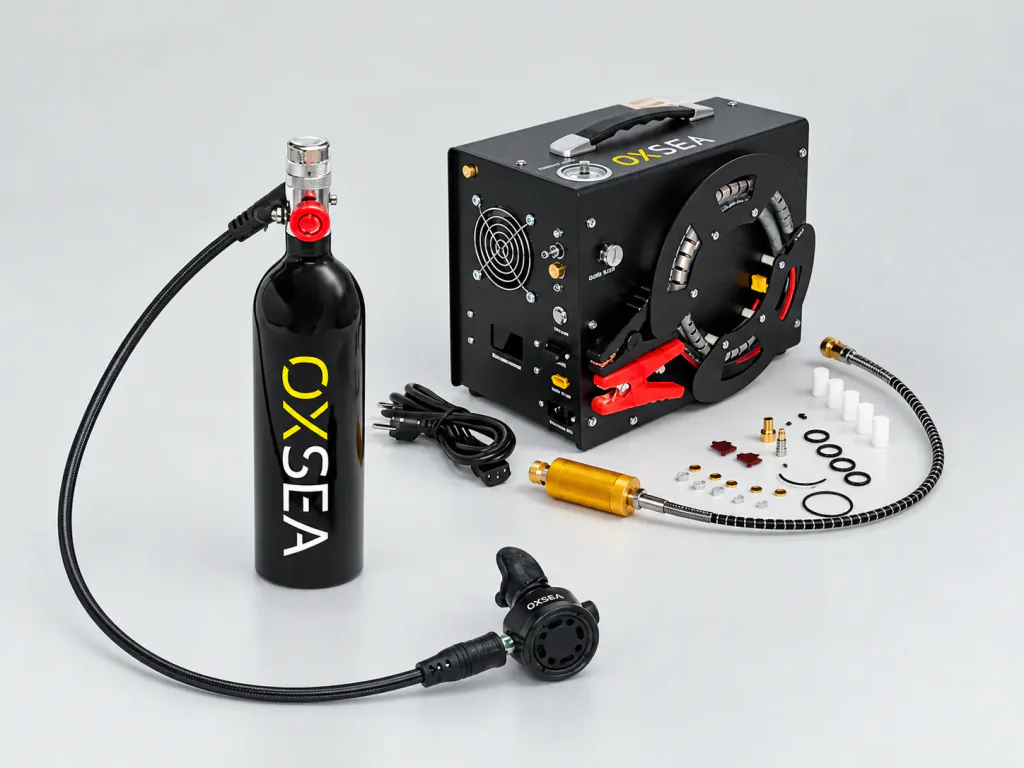
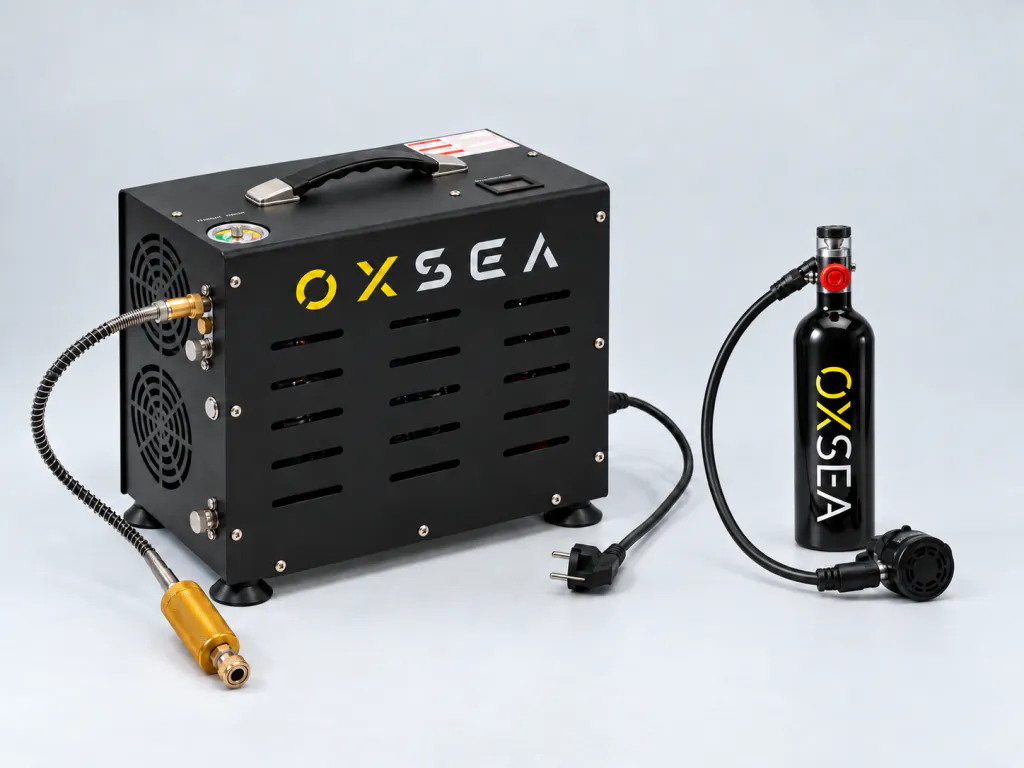
The OX1000 Pack + Mini Compressor pairs the tank with a compatible refill system. For the US market, the Mini Compressor operates on 12 V DC and supports the OX500 and OX1000. Follow its electrical, filtration, ventilation, and operating instructions; position the air intake away from exhaust and other contaminants.
The Power Compressor supports the full range and is the compressor supplied in OX2000 packs. The manual pump is for the OX500 only. Use breathing-quality air, never pure oxygen, and never substitute a bicycle pump or workshop compressor.
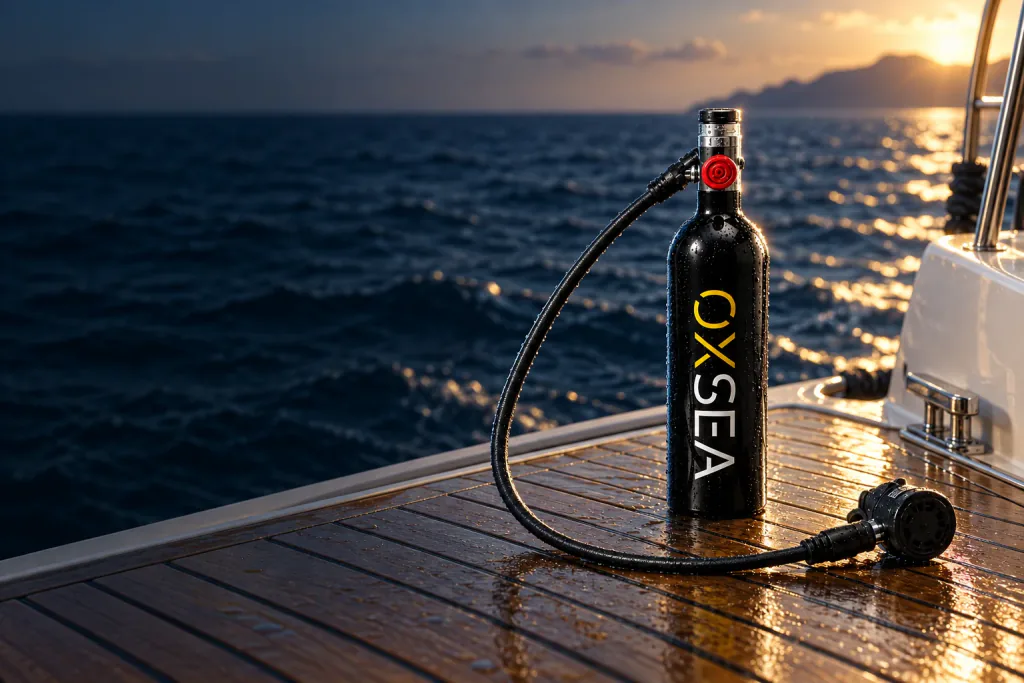
OXSEA · OX1000 Pack + Mini Compressor
Equip your boat for short underwater inspections.
Choose the OX1000 with its back-mounted harness and a compatible 12 V refill system for planned inspections and light propeller upkeep.
How Often Should You Clean a Boat Propeller?
Inspect regularly during the season and adapt the interval to the growth you actually see. A boat that sits unused in warm saltwater may need a different schedule from one kept on a trailer. Record the condition after each check instead of assuming one calendar interval fits every boat.
If deposits keep returning quickly, discuss coating condition and maintenance options with your boatyard. After using your OXSEA equipment, rinse and care for it according to the manual, let it dry as directed, and keep up with the manufacturer’s inspection schedule.
For a boat owner equipped and prepared for underwater maintenance, the useful purchase is a setup that fits the actual job: a compact tank, comfortable carrying arrangement, and compatible refill method. Explore the OXSEA equipment for boat owners and choose the configuration for your next planned inspection.
Your questions
Can you clean a boat propeller without taking the boat out of the water?
Light soft growth may be removable with a suitable wet sponge where local rules permit and dive conditions are appropriate. Disable propulsion, use a dive buddy and topside support, and protect any coating. Heavy barnacles, tangled line, or damage may require professional work or a haulout.
What is the best way to remove barnacles from a propeller?
Choose a method approved for the propeller’s metal and coating. If barnacles resist gentle wiping, arrange cleaning ashore or by a qualified professional. Avoid underwater chiseling and do not apply acids or other cleaning chemicals in the water.
Can I use vinegar to clean a boat propeller?
Don’t assume vinegar is compatible with every propeller or coating. Identify the material and finish, then follow the manufacturer’s cleaning instructions. Any approved chemical treatment belongs at a suitable shore facility with runoff control, not in the water.
Which OXSEA tank is best for cleaning a boat propeller?
The OX1000 is our preferred option for short inspections and light upkeep by competent scuba divers. Its 1 L cylinder is carried on your back in a harness, with a separate regulator. The OX500 suits brief checks, while the OX2000 offers more air capacity for a suitable planned immersion.
Is 15 minutes enough to clean a boat propeller with an OX1000?
The OX1000’s up to 15 minutes is indicative, not a guaranteed cleaning window. Effort, breathing rate, depth, and conditions affect consumption. Plan for the entire immersion with a reserve, monitor the gauge, and stop before the job uses that reserve.
A question about your situation? Write to the OXSEA team
Take the plunge
Your hull,
up close.
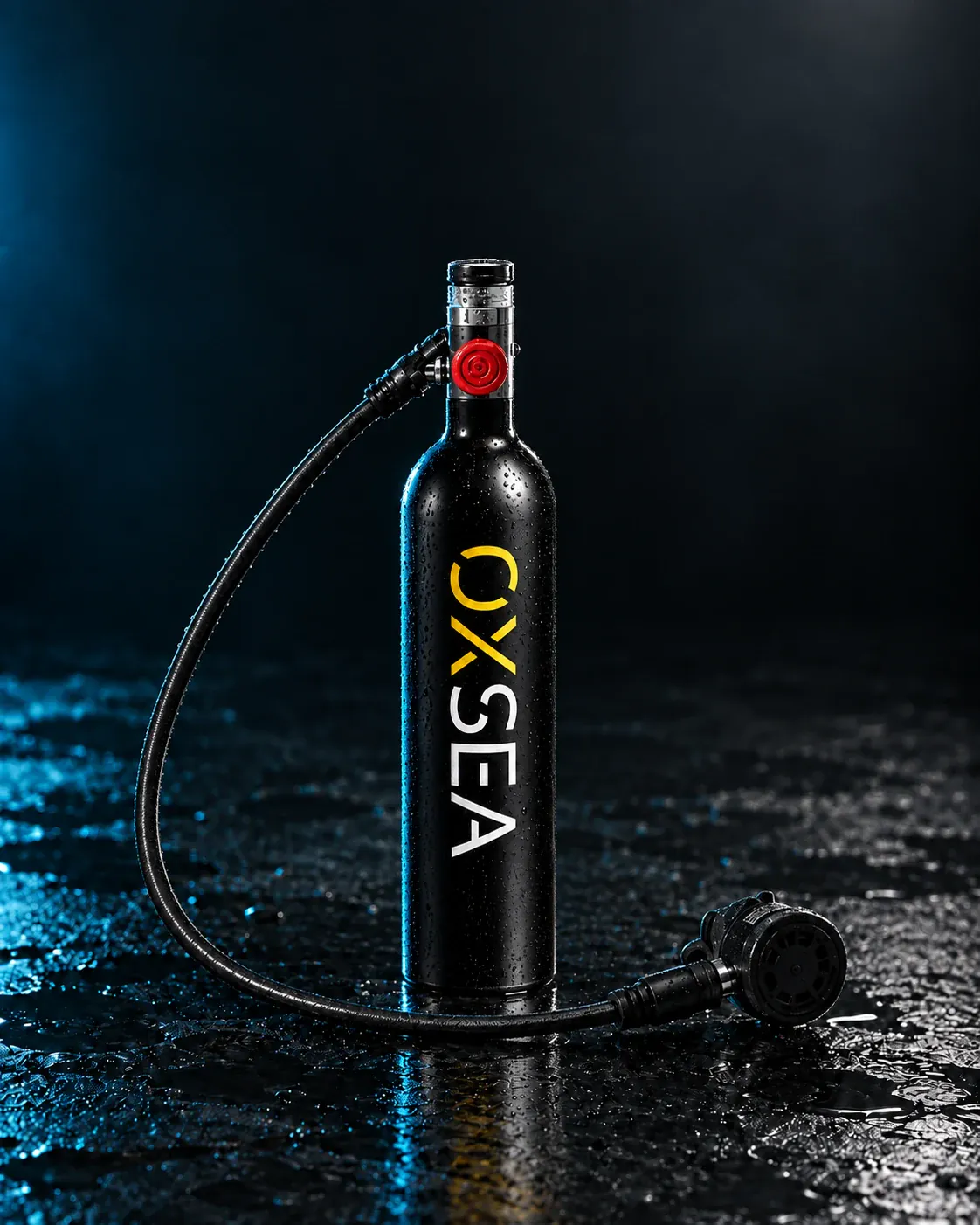
A rechargeable air supply on board to look at, clean and check everything below your waterline, whenever you choose.
OX1000
- 1 L
- Up to 15 min*
- On the back, with harness
With its refill system, ready to go
Equip my boat Compare mini scuba tanks
* Estimated air time, not guaranteed. OXSEA tanks are designed to be accessible to everyone, with no training required.
Read next
All articles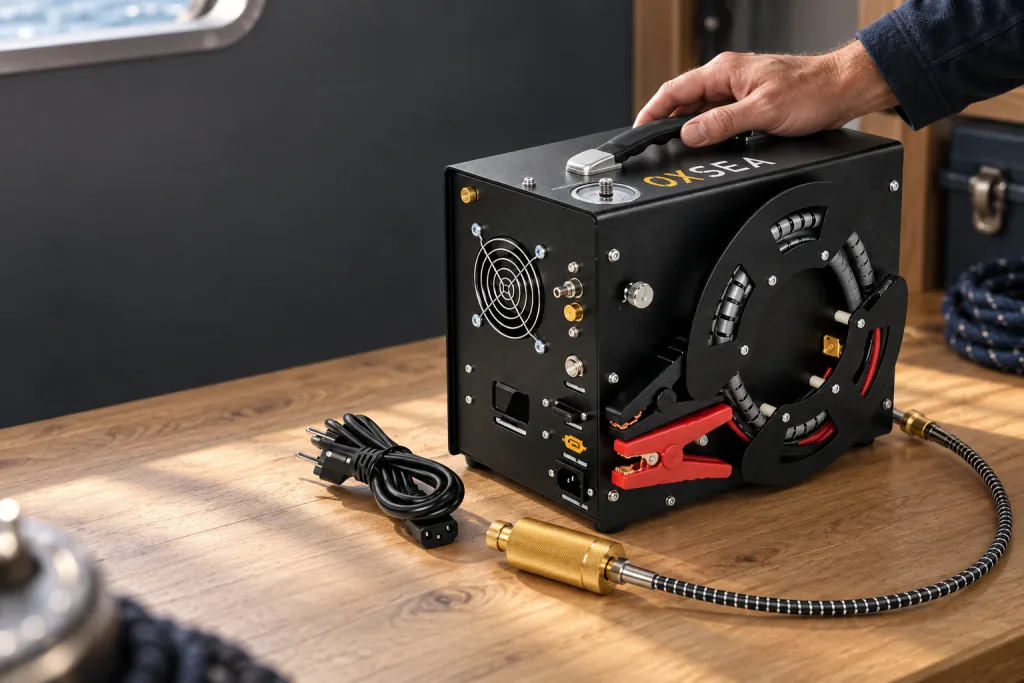
Getting started underwater7 min read
Mini Scuba Tank Refill Options for US Buyers
Compare OXSEA manual pumps, 12 V DC Mini Compressors, and AC-powered Power Compressors. Find the refill setup that matches your tank and available power.
Getting started underwater9 min read
OXSEA Mini Scuba Tank Buying Guide for US Buyers
Choose your OXSEA tank around how you’ll carry it, use it, and refill it. Compare the US range, understand air time estimates, and check the order details before buying.
Getting started underwater8 min read
How Long Does a Mini Scuba Tank Last Underwater?
Compare OXSEA’s estimated air times, learn why depth and effort change them, and see which tank and refill system fits your plans. Actual air time varies with use and conditions.
OX1000$399.00 USD
Discover